
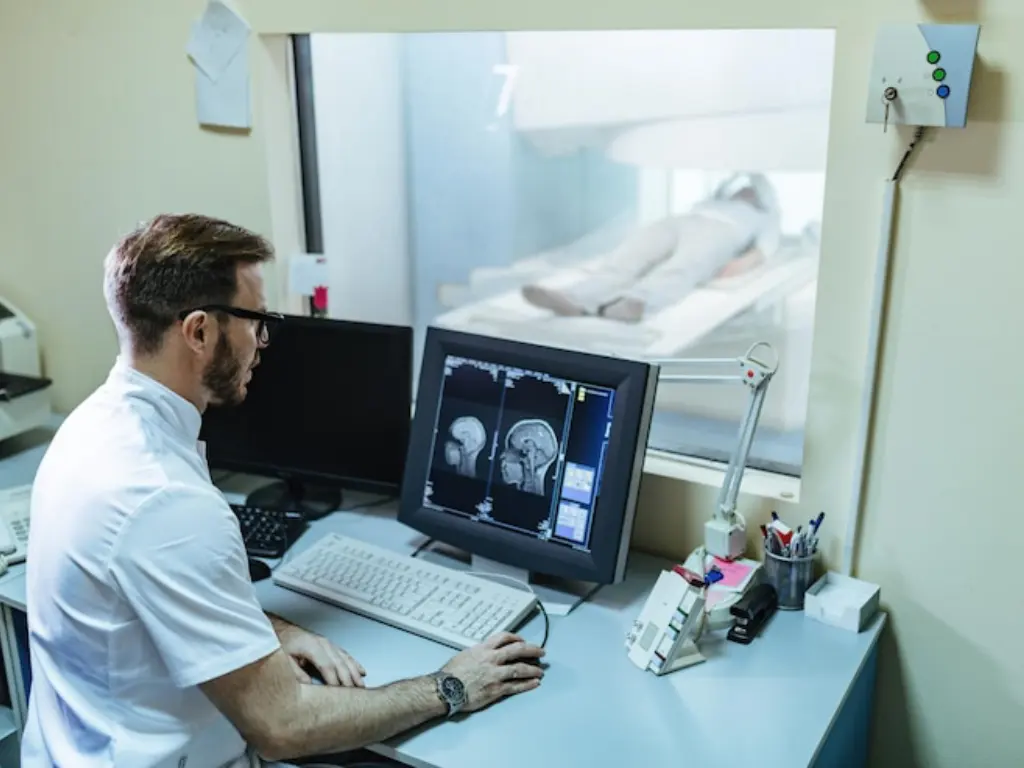
Nuclear medicine is an advanced branch of medical imaging that utilizes radiopharmaceuticals to assess organ function and cellular activity within the body. Unlike methods such as CT scans or MRI, which primarily display the structural appearance of organs, nuclear medicine determines how organs are functioning and whether their activity is normal. In this technique, a very small amount of radioactive material is either injected or ingested into the body. This material accumulates in specific organs, and nuclear medical imaging devices (such as PET or SPECT) capture and analyze the data.
What diseases can nuclear medicine diagnose?
Nuclear Medicine plays a key role in the diagnosis, staging, and monitoring of treatment for many diseases. Its most important applications include the following:
Cancerous diseases
- Nuclear medicine is one of the most precise methods for:
- Early detection of cancer
- Determining the extent of cancer spread in the body
- Evaluation of the Response to Chemotherapy or Radiotherapy
- Diagnosis of Cancer Recurrence
The use of functional imaging enables the detection of cancer cells even in their early stages.
Cardiovascular diseases
In cardiovascular diseases, nuclear medicine is used to examine:
- Blood flow to the heart muscle
- The viability of heart tissue after a heart attack.
- Severity of coronary artery stenosis
It assists and plays a crucial role in decision-making regarding medical treatment, angiography, or surgery.
Neurological Diseases
In the field of the brain, nuclear medicine is used for diagnosis and evaluation:
- Alzheimer’s and Types of Dementia
- Epilepsy and Determination of Seizure Focus
- Brain tumors
- Cerebral blood flow disorders
It is used and provides information beyond conventional imaging.
Thyroid Diseases
Nuclear medicine has extensive applications in evaluating thyroid function, including:
- Diagnosis of hyperthyroidism or hypothyroidism
- Evaluation of Thyroid Nodules
- Evaluation and treatment of certain thyroid cancers
Bone and inflammatory diseases
This method can be utilized in the diagnosis of:
- Bone metastases
- Bone infections
- Hidden inflammations or undetected fractures
It may be highly effective.
Nuclear medicine, with its focus on the actual functioning of organs, plays a crucial role in early diagnosis, selecting appropriate treatment methods, and monitoring the progress of disease management. This approach serves as a valuable complement to other imaging techniques and, in many cases, provides physicians with critical information.

Common Methods in Nuclear Medicine
In nuclear medicine, various techniques are employed, each designed to evaluate organ function and diagnose specific types of diseases. The selection of an appropriate method depends on the type of disease, the organ involved, and the physician’s diagnostic objectives. The most common techniques in nuclear medicine include:
PET scan (Positron Emission Tomography Scan)
PET scan One of the most advanced methods in nuclear medicine, it is used to study metabolism and cellular activity, particularly in cancer patients.This method plays an important role in:
- Early Detection of Cancer
- Disease staging determination
- Evaluation of response to treatment
- Diagnosis of Cancer Recurrence
It is typically performed in combination with a CT scan (PET/CT) to simultaneously evaluate both functional and structural information.
SPECT (Single Photon Emission Computed Tomography)
SPECT is a common method in nuclear medicine used to evaluate blood flow and organ function. This technique is more accessible compared to PET scans and has a wide range of applications, including:
- Evaluation of myocardial blood supply
- Cardiovascular Disease Assessment
- Brain Function Analysis
- Diagnosis of certain bone disorders
Cardiac Scan (Myocardial Perfusion Scan)
This method is used to evaluate blood flow to the heart muscle during rest and activity, aiding in the diagnosis of:
- Narrowing or blockage of coronary arteries
- The viability of the heart muscle after a heart attack
- The need for angiography or heart surgery.
It helps.
Thyroid scan
Thyroid scanning is one of the most common applications of nuclear medicine and is used for:
- Evaluation of Thyroid Gland Function
- Diagnosis of hyperthyroidism or hypothyroidism
- Evaluation of Thyroid Nodules
- Monitoring certain types of thyroid cancer
It is used.
Bone scan
In a bone scan, the metabolic activity of the bones is evaluated, and this method is used in the diagnosis of:
- Bone metastases
- Bone infections
- Hidden inflammations or fractures
It has extensive applications.
Kidney scan
This method is used to evaluate kidney function, blood flow, and urine drainage, and it aids in the diagnosis of:
- Urinary tract obstruction
- Kidney dysfunction
- Evaluation of Kidney Function Post-Surgery
It plays an important role.
Nuclear medicine techniques, focusing on the actual function of organs, provide information that is often unattainable through conventional imaging methods. Proper use of these techniques aids in more accurate diagnoses, selecting appropriate treatments, and improving patient outcomes.
Is nuclear medicine dangerous?
One of the common questions patients have about nuclear medicine is regarding its safety and potential risks. Generally, nuclear medicine is considered a safe and well-regulated method that has been used worldwide for years in accordance with international standards. These procedures involve the use of very small amounts of radioactive materials, with radiation doses carefully calculated to remain within safe limits. These substances are eliminated from the body within a short period of time and, in most cases, do not cause any adverse effects for the patient.
The level of radiation in nuclear medicine
The amount of radiation received in routine nuclear medical imaging is typically:
- Less than or comparable to certain imaging methods such as CT scans.
- It is purposefully limited only to the area under examination.
- It is carried out under the close supervision of a physician and specialized staff.
For this reason, if prescribed by a physician, the diagnostic benefits of this method far outweigh its potential risks.
Can everyone practice nuclear medicine?
In certain specific conditions, the use of nuclear medicine requires caution.
- Pregnancy: Generally not recommended except in essential cases.
- Breastfeeding: A temporary interruption in breastfeeding may be necessary.
- Diabetic patients: It is important to control blood sugar levels before undergoing a scan.
In such cases, the final decision is made by the treating physician.
Potential Side Effects of Nuclear Medicine
Serious complications in nuclear medicine are extremely rare. In limited cases, it is possible that:
- Mild discomfort at the injection site
- Very mild allergic reactions
It is observed that they are usually transient and do not require specific treatment.
Nuclear medicine is a safe, precise, and reliable method for diagnosing and monitoring many diseases. Adhering to medical guidelines and performing this procedure in well-equipped centers minimizes potential risks, allowing patients to undergo these evaluations with greater confidence.

Advantages and Limitations of Nuclear Medicine
Nuclear medicine is one of the most advanced diagnostic methods in modern medicine, offering insights beyond conventional imaging by examining organ function and cellular activity. However, like any other medical approach, this field also has its limitations alongside its advantages, and being aware of these can aid in making informed decisions.
Advantages of Nuclear Medicine
- Early detection of diseases
Nuclear medicine can detect functional and metabolic changes in cells before structural alterations occur, aiding in the early diagnosis of diseases.
- Evaluation of the actual performance of organs
Unlike many imaging techniques that only display the physical appearance of organs, nuclear medicine determines how organs function and whether their performance is normal or not.
- High precision in cancer diagnosis
This method plays a significant role in the diagnosis, staging, and monitoring of cancer treatments, and it can accurately identify active cancer cells.
- Assisting in choosing the best treatment method
Information obtained from nuclear medicine helps the physician select a more appropriate treatment and prevents unnecessary interventions.
- A non-invasive and safe method
In most cases, nuclear medicine is performed painlessly and with a high level of safety, with radiation levels carefully controlled.
Limitations of Nuclear Medicine
- The use of radioactive materials
Although the radiation level is low and considered safe, certain situations, such as pregnancy or breastfeeding, require caution and further evaluation.
- More limited accessibility compared to certain methods.
Some nuclear medicine techniques, such as PET scans, are not available at all centers and require specialized equipment.
- A need for specialized interpretation.
The results of nuclear medicine imaging must be interpreted exclusively by a specialist in nuclear medicine and are not sufficient on their own for a definitive diagnosis.
- The impact of certain physical conditions on outcomes
Factors such as high blood sugar, the use of certain medications, or intense physical activity prior to the scan can reduce the accuracy of the results.
Nuclear medicine, despite certain limitations, is one of the most precise and effective diagnostic methods for evaluating organ function and enabling the early detection of numerous diseases. Understanding the advantages and limitations of this approach helps patients navigate the diagnostic and treatment process with greater awareness and confidence.

The Role of Nuclear Medicine in the Early Diagnosis of Diseases
Early diagnosis is one of the most critical factors for successful treatment of many diseases. Nuclear medicine, with its focus on evaluating organ function and cellular activity, enables the detection of diseases at stages where structural changes are not yet visibly apparent. Unlike conventional imaging methods, which often reveal diseases only after anatomical damage has occurred, nuclear medicine can identify early metabolic and functional disturbances. This allows for more effective and less invasive treatment during the initial stages of the condition.
Early detection of cancer
In many types of cancer, an increase in cellular metabolic activity occurs long before the tumor grows in size. Techniques such as PET scans can detect these changes, aiding in the early diagnosis of cancer—a critical factor in improving treatment outcomes and reducing complications.
Early Detection of Cardiovascular Diseases
In cardiovascular diseases, nuclear medicine can detect reduced blood flow to the heart muscle before the occurrence of a heart attack or permanent damage. This enables the physician to initiate preventive treatment at the appropriate time.
Early Diagnosis of Neurological Disorders
In diseases such as Alzheimer’s or certain neurological disorders, functional changes in the brain appear much earlier than structural changes. Nuclear medicine, by examining brain function, enables early diagnosis and facilitates the initiation of treatment or supportive interventions. Nuclear medicine, by detecting functional changes in the early stages of disease, plays a crucial role in increasing treatment effectiveness, reducing complications, and improving patients’ quality of life. For this reason, this method is considered one of the key tools of modern medicine in the early diagnosis of many diseases.
Frequently Asked Questions About Nuclear Medicine
What is the difference between nuclear medicine and radiology?
Nuclear medicine primarily focuses on evaluating organ function and cellular activity, whereas radiology typically depicts the structural appearance of organs. For this reason, nuclear medicine can detect diseases at earlier stages, before any significant anatomical changes become evident.
Is nuclear medicine essential for cancer diagnosis?
In most cases, no, but in many types of cancer, nuclear medicine plays a highly significant role. This approach aids in early diagnosis, determining the stage of the disease, assessing the response to treatment, and detecting cancer recurrence. It provides information that is not easily obtainable through other methods.
Does undergoing nuclear medicine procedures cause pain?
No, nuclear medical imaging procedures are typically painless. The only potential discomfort may arise from the injection of the radiopharmaceutical at the beginning, which is similar to a standard intravenous injection.
What care is necessary after undergoing nuclear medicine?
In most cases, there are no specific restrictions, and the patient can resume their daily activities. It is recommended to drink plenty of fluids to help the injected substance be eliminated from the body more quickly. Specific instructions will be provided to the patient by the imaging center.
Is nuclear medicine suitable for everyone?
In most individuals, yes; however, in situations such as pregnancy, breastfeeding, or certain specific medical conditions, caution or further evaluation may be necessary. The final decision regarding the use of nuclear medicine is always made by the treating physician.
Summary
Nuclear medicine One of the most advanced diagnostic methods in modern medicine focuses on evaluating organ function and cellular activity, enabling the early detection of numerous diseases. This technique utilizes radiopharmaceuticals to provide physicians with precise and practical information, which in many cases cannot be obtained through conventional imaging methods.