

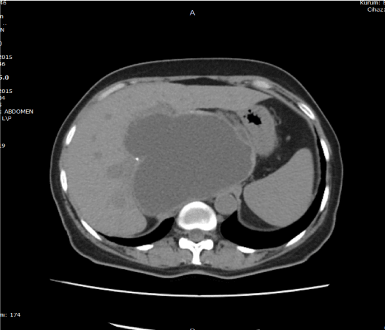
Hydatid cyst is a parasitic disease caused by the larva of Echinococcus. Various organs of the body, primarily the liver and lungs, are affected by this condition.
The common treatment for hydatid cysts is surgery, which is often associated with postoperative complications. The presence of certain underlying conditions can complicate the surgical procedure or increase the risk of complications. The efficacy and benefits of medical treatments remain a topic of debate; however, among the available medications, albendazole has proven to be more effective than others. Unfortunately, this type of treatment is not always successful, and continuing such therapy involves significant side effects and high costs.

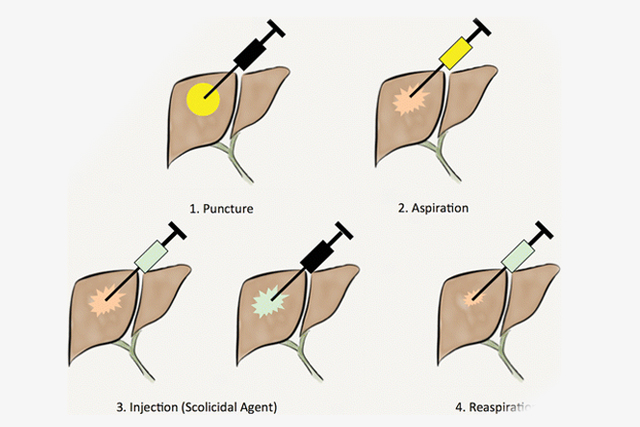
Another treatment method, which is more effective and has fewer side effects compared to the previously mentioned approaches, involves the drainage of the hydatid cyst using a fine needle through the skin under ultrasound guidance. In this method, the patient is first administered 800 milligrams of albendazole orally, divided into equal doses in the morning and evening, for a duration of ten days. This treatment is continued for twenty days after the cyst has been drained. The drainage procedure is performed percutaneously under ultrasound guidance, during which the cyst is evacuated using a fine needle.
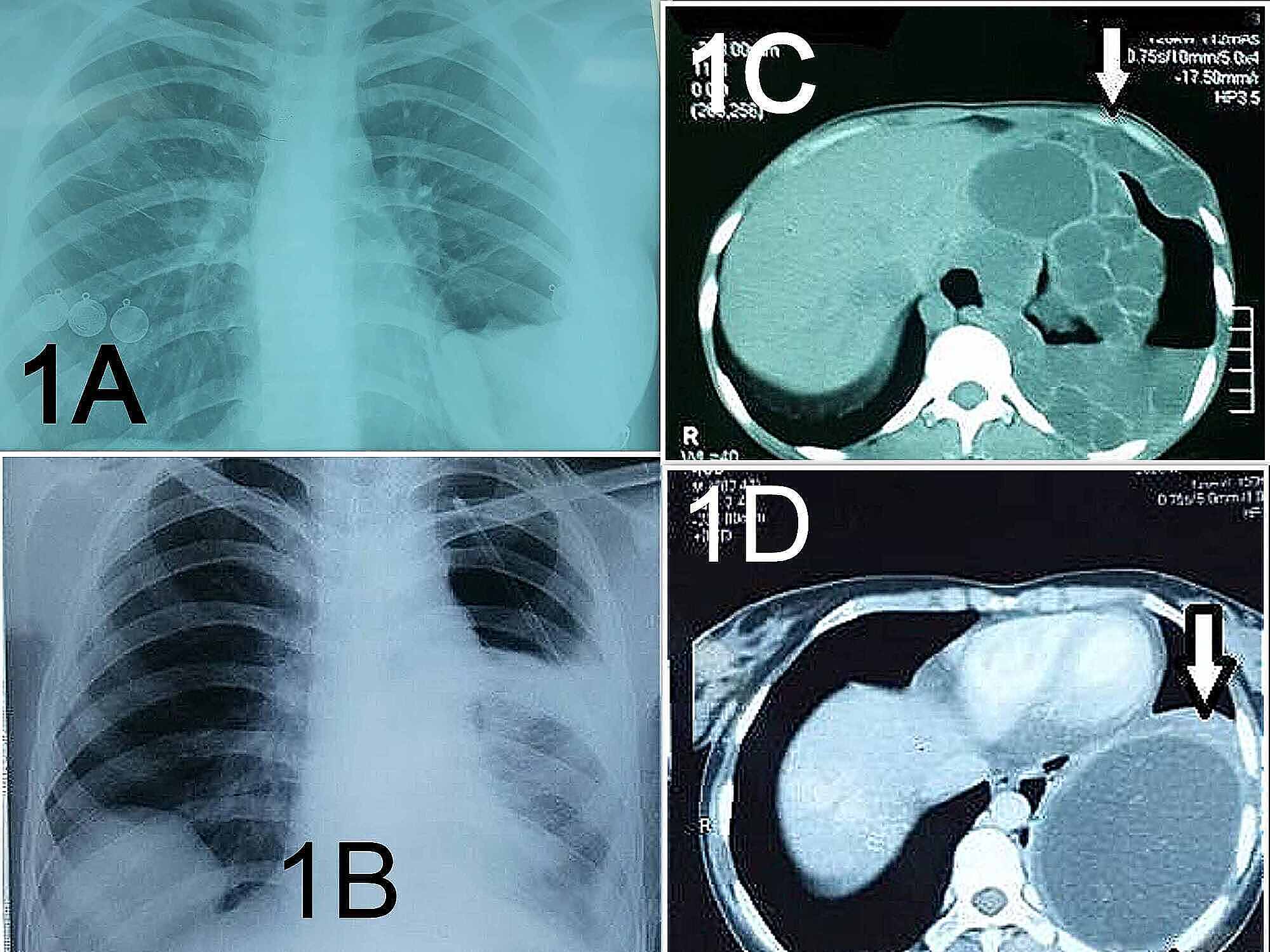
The site for percutaneous drainage is determined using ultrasound, and under ultrasound guidance, a fine needle is inserted into the cyst cavity. Once the needle is in place, a specialized catheter for drainage is positioned within the cyst.
And the fluid is discharged.